Natalia Irina Roman is a Romanian artist, curator and researcher based in Berlin since 2006. Her academic background spans Fine Arts, Public Policy, law and experience design, with studies at Bard College Berlin, the Hertie School of Governance, Goethe University Frankfurt, Kaospilot in Aarhus and Bauhaus-Universität Weimar. She holds a Master of Public Policy from the Hertie School of Governance and a PhD in Art from Bauhaus-Universität Weimar. Her professional experience encompasses artistic production, curatorial work, cultural consultancy, university teaching and public programming. She has collaborated with academic institutions and cultural organisations in Germany and internationally, including Columbia University in New York, where she conducted research as a Fulbright fellow. Alongside her artistic career, she has developed an extensive practice of interdisciplinary exchange, bringing together artists, researchers, architects and urban practitioners. She is also a former professional chess player.
Natalia Irina Roman is a Romanian artist, curator and researcher based in Berlin since 2006. Her academic background spans Fine Arts, Public Policy, law and experience design, with studies at Bard College Berlin, the Hertie School of Governance, Goethe University Frankfurt, Kaospilot in Aarhus and Bauhaus-Universität Weimar. She holds a Master of Public Policy from the Hertie School of Governance and a PhD in Art from Bauhaus-Universität Weimar. Her professional experience encompasses artistic production, curatorial work, cultural consultancy, university teaching and public programming. She has collaborated with academic institutions and cultural organisations in Germany and internationally, including Columbia University in New York, where she conducted research as a Fulbright fellow. Alongside her artistic career, she has developed an extensive practice of interdisciplinary exchange, bringing together artists, researchers, architects and urban practitioners. She is also a former professional chess player.
Natalia Irina Roman’s interdisciplinary practice explores how space is experienced and shaped through movement, light and duration. Working across installation, video, photography and text, she develops site-responsive works that engage with the architectural, historical and social conditions of a place. Her work often takes shape in railway environments and transitional urban spaces, where circulation, waiting and everyday encounters become central to the experience of space. Through the interplay of natural light, projections, vegetation, stone, found objects and historical materials, Roman examines the relationship between built structures and their surroundings, questioning the boundaries between interior and exterior, permanence and transition.
A central aspect of her practice is the investigation of public and infrastructural spaces as sites of artistic intervention, revealing overlooked spatial conditions and possibilities for alternative forms of inhabitation. Her installations respond to the specificities of their environments, unfolding through changing light, duration and the movement of people.
During the residency, Roman developed a series of video works, photographic studies and installations that translated her investigations of railway infrastructures and transitional environments into an exhibition context. By reworking experiences of transit, waiting and spatial thresholds, the project explored how light, movement and duration could be reconfigured within the gallery. Through these works, she extended her site-responsive approach into new spatial compositions, examining how the experience of moving through a place could inform the ways an artwork is encountered, perceived and understood.
INTERVIEW
Your work spans visual art, text, and space, often centered on trains and railways. What first drew you to the railway as a subject?
I was interested in space long before I became interested specifically in railways. What drew me to the railway was the combination of architecture, movement and people. I discovered former interlocking towers along the tracks that had lost their technical function but were still very present in the landscape. I wanted to enter them, understand what had happened there and make art in them. That led me to Deutsche Bahn, to railway employees and eventually to the passengers looking out of the train window. The railway became a very large field of research and I am still discovering new parts of it.
You’ve described art needing “three seconds.” Where does that idea come from, and does it apply to how you make work, or how it should be experienced?
The three seconds come from looking out of a train window. When you pass an artwork installed along the tracks, you might have only three seconds to see it. I became interested in whether that can be enough. I think it can. An encounter with art does not necessarily have to begin with understanding; sometimes an image, a colour or something strange in the landscape stays with you and continues afterwards. It has influenced how I make work, especially for train passengers, because I think very carefully about distance, speed, repetition and what can register in a very short moment.
Participatory formats show up again and again in your practice, at Gemeinschaftshaus, Spreefeld, Hamburger Bahnhof. What does inviting other people into the work give you that working alone doesn’t?
Other people bring knowledge and experiences that I do not have. At Gemeinschaftshaus Gropiusstadt, for example, I interviewed 17 people about how they live and their very different answers became part of the installation. In participatory work I am interested in creating a structure and then allowing other people to change it. That means giving up some control, which I find productive. The work can go somewhere that I could not have planned alone.
“STRECKEN II STÜCKE” grew out of trains of thought collected between Vienna and Istanbul. How do you turn a journey into material for an installation?
During the Railway Aesthetics conference between Vienna and Istanbul, I collected trains of thought from people travelling with me. I was interested in what happens to thinking when the body is moving through a landscape for many hours. For STRECKEN II STÜCKE, these thoughts became one layer of the installation alongside station names and a historical S-Bahn window, which are historical objects on loan from the S-Bahn Museum. I did not want to illustrate the journey. I wanted to reconstruct something of its rhythm: thoughts appear, disappear, connect with something outside the window and then move on.
You’ve called train passengers “spectators” in your research. What made you look at travel through that lens?
It started very practically. When I installed art in former interlocking towers beside active railway lines, the audience was often inside the train. They had not decided to visit an exhibition and sometimes did not even know that an artwork was coming. That made me ask what kind of spectator a train passenger is. The window becomes a frame, the train determines the speed and viewpoint, and the same passenger might encounter the work repeatedly on a daily route. This is someone temporarily between places who can also become an audience for art.
The Slow Line project turns train journeys into art with students. What do you want participants to notice that they’d normally miss?
I want them first to look. We are very trained to treat the journey as the time between departure and arrival, and increasingly that time is filled by a phone or laptop. I ask students to pay attention to what is actually happening: changing landscapes, sounds, stations, conversations, waiting, other passengers, technical structures, boredom and unexpected interruptions. From there they decide what matters to them and what artistic form it might take. The point is not that everybody makes art about trains; the train becomes a method for observing and researching.
Your residency at ARTLAB_LCC runs a full year, April 2026 to April 2027. How does that timeline change the way you’re approaching this project compared to shorter residencies?
A year gives me permission not to know immediately what the final work will be. I can make something, leave it, return to it and see whether it still interests me. I can also observe how the space and neighbourhood change through different seasons. With a short residency there is often pressure to arrive, produce and show something very quickly. Here I can experiment more and allow several works to develop in relation to each other.
You’re known for site-specific, participatory work. Has anything about the Neukölln space or neighborhood already started shaping what you’re making here?
The window immediately interested me because it connects the studio directly with the street. I invited people passing by, including neighbours and children, to leave their footprints. I cut these footprints in gold semi-reflective vinyl and placed them across the window. From a distance they look similar, but when you look closely, small differences appear and each footprint starts to tell something about the person who left it. The reflective material also catches movement in the corner of your eye as you pass. When you turn to look, you see the footprints, but you also see yourself reflected among them. I was interested in this moment when a passer-by first notices traces of other people and then suddenly becomes part of the image.
SELECTED EXHIBITIONS
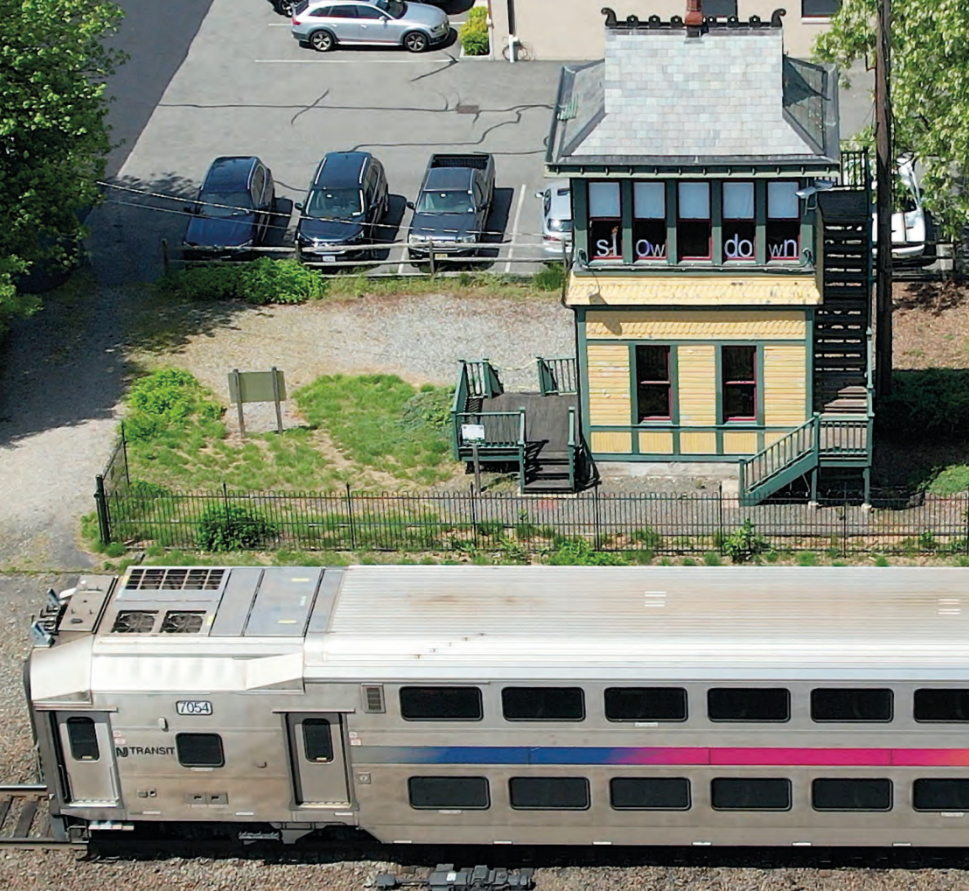
Her solo exhibitions and projects include STRECKEN II STÜCKE at A Trans, Berlin (2026); How We Live? at Gemeinschaftshaus, Berlin (2025–2026); Haltestelle der Linie 7 at BLO, Berlin (2025); 48 mal warten as part of 48H Neukölln, Berlin (2024); In-ner Transit at RCI, New York City (2024); slow down, an installation for train passengers in Waldwick, New Jersey (2024); Closed Drawers at Avery, Columbia University, New York City (2024); Invisible Strings in Berlin and Aarhus (2023); Along the Lines, presented in former Deutsche Bahn signal towers and other railway-related sites in Berlin (2018); Halle 125 at Reinbeckhallen, Berlin (2014); Just Another Boat at Round the Corner Gallery, Lisbon (2013); Flying Ships at the 48H Neukölln Festival, Berlin (2012); and Asphalt Grün at Peter-Behrens-Halle, Berlin (2010).
Her selected group exhibitions include OUT/SIDE/IN at ARTLAB_LCC, Berlin (2026); ONSITE Festival at Kesselhaus Museum Herzberge, Berlin (2025); ISO IT at My Place Storage, Potsdam (2025); Koppelweg Competition at Schloss Britz, Berlin (2024); Rabbits and Rails, presented at venues in Brussels, Varbuse, Padova and Munich (2022–2023); Unter den Nägeln at Thüringer Landtag, Erfurt (2022); Art and Public Transport at Rabryka, Görlitz (2021); Connecting Lights at Industriesalon, Berlin (2020); Urban Refractions as part of Urban Art Week, Berlin (2019); Dissolving Boundaries at the University Library, Weimar (2018); Tracing Utopia, with André Stache, at Löwenpalais and Schloss Biesdorf, Berlin (2017); and More than a Million at GlogauAIR, Berlin (2014).
Alongside her artistic practice, Roman develops curatorial projects, artist residencies and collaborative research initiatives examining the relationship between art, infrastructure and urban life. In 2026, she curates a project with Monique Besten and Aleksandra Ianchenko at Projekthaus Potsdam and initiates and coordinates an artistic and academic symposium on reinventing artist residencies in Oulu, Finland. In 2025, she curates Other Spaces, a series of two exhibitions presented at U-Bahn Spichernstraße in Berlin and Herzberg (Elster) railway station, and Tiny Spaces Deep Connections at Projekthaus Potsdam, with Eleni Charcharidou.
Her curatorial projects frequently activate overlooked spaces and connect artistic production with public infrastructure. These include ZugGang und Fensterreise (2024), curated with Claudia Aragon and presented in Berlin and Herzberg; Radio Industry (2023), developed with Sascha Bachmann at Stellwerk ERK in Erkner; and Along the Lines II (2019), featuring works by Maria Vill, David Mannstein and Anna Talens at S-Bahn Tempelhof and Erkner. In 2019, she also initiated Zone C I, an artist residency at Projekthaus Potsdam, and participated in the residency programme Minimal Travelling at Kunsthalle Below. Earlier projects include MigrARTE (2015 and 2017), a participatory art initiative developed with Rocio Vásquez and Sonia Peters, and One Month, 31 Portraits (2011–2014), a storytelling project combining photography and text.
Roman also initiates and moderates public conversations bringing together artists, researchers, architects, urban practitioners and policymakers. Her programmes include Art Tracks at the Goethe-Institut in New York (2024), a discussion with representatives of public transport and railway art initiatives; Collaborative Forms of Living in Berlin (2021), addressing cooperative housing and collective living; Curating Disused Spaces of DB (2019); Disused Spaces of DB (2018); Trains and Art (2018); and Space Transformation (2016).
AWARDS AND GRANTS
Roman’s artistic and research projects have received support from a range of cultural, academic and international funding programmes. Recent awards include the Arbeitspaket grant for visual artists from the Ministry of Culture of Brandenburg (2026), Neukölln Kultur funding (2025–2026), the Bauhaus Frauenfonds (2025–2026), Creative Europe support for Tiny Spaces Deep Connections (2024–2026), and a Fulbright grant supporting research at Columbia University in New York (2024).
Other recognitions include the Putspace research and exhibition grant (2021), the Connecting Lights art competition at Industriesalon Berlin (2020), the Minimal Travelling residency at Kunsthalle Below (2019), project funding from the Hauptstadtkulturfonds for Along the Lines (2018–2019), and research grants from Bauhaus-Universität Weimar.